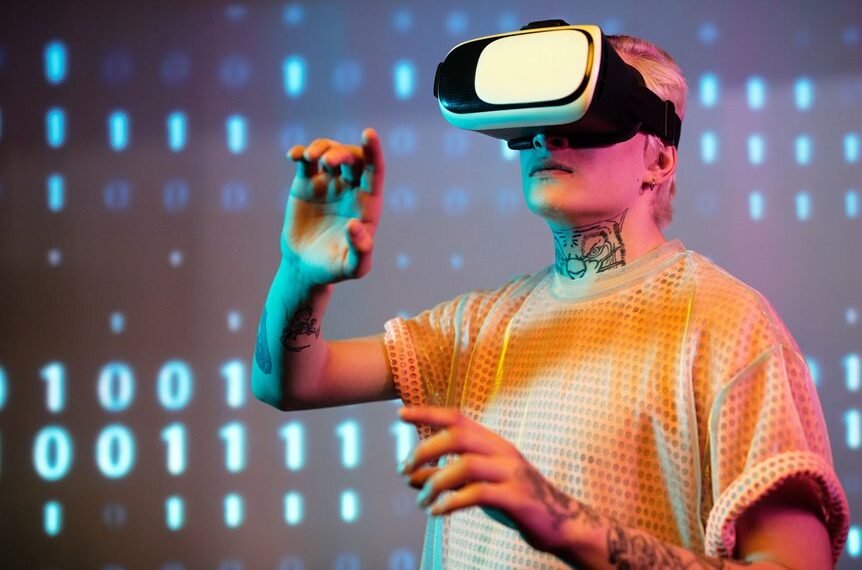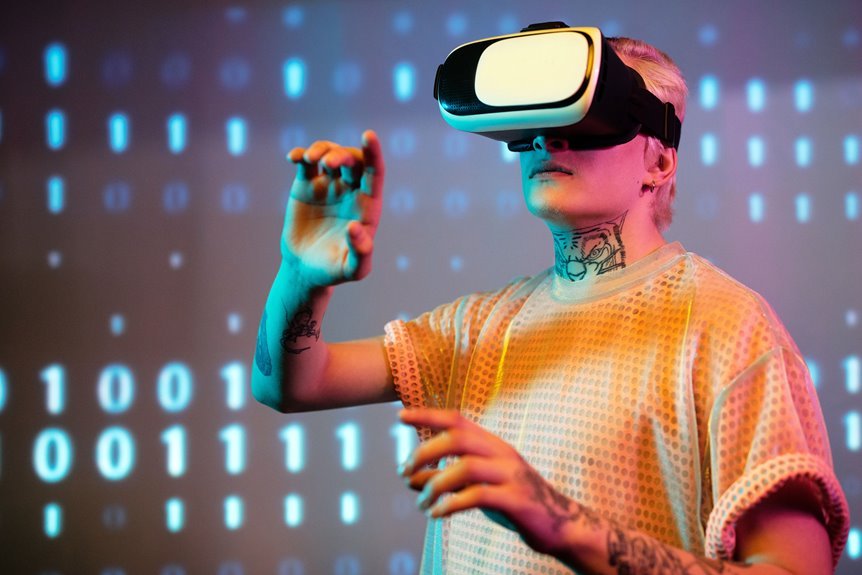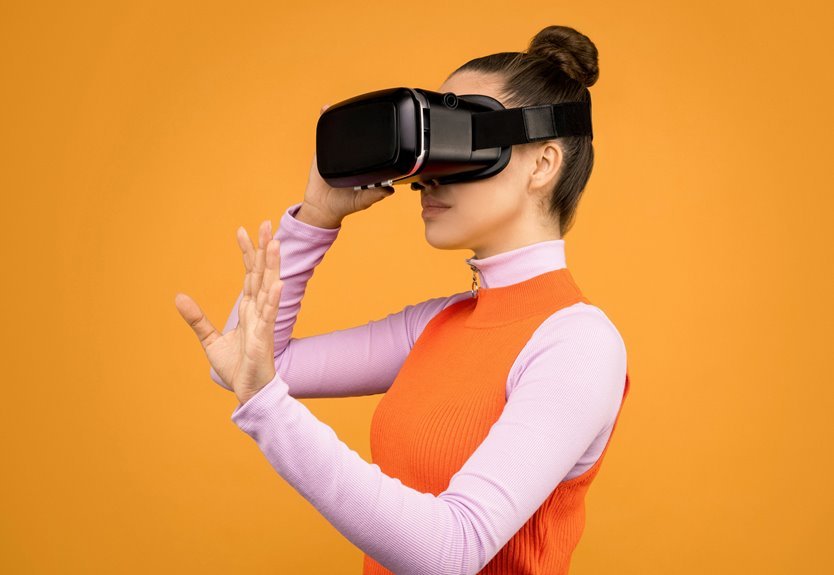
As you explore the evolving landscape of immersive technologies, the debate between virtual reality and augmented reality becomes increasingly relevant. Each offers unique benefits—VR immerses you in entirely digital realms, while AR enhances your real-world surroundings. But which technology will ultimately take the lead? Understanding their distinct strengths and weaknesses could shape your perspective on their future. What might a world look like where they coexist or even merge?
Understanding Virtual Reality
Virtual reality (VR) immerses you in a completely digital environment, often making you feel like you’ve stepped into another world.
Through VR, you can explore vast landscapes, engage in thrilling adventures, and connect with others in immersive environments.
These virtual experiences allow you to break free from physical limitations, offering a unique sense of freedom and creativity that traditional media simply can’t match.
Exploring Augmented Reality
Augmented reality (AR) enhances your perception of the real world by overlaying digital information onto your environment. You can experience augmented reality applications in gaming, education, and retail, making interactions more immersive.
However, AR also faces challenges, like technical limitations and user adaptation. Understanding these aspects helps you appreciate the potential of AR while navigating its hurdles on the path to widespread adoption.
Comparing Strengths and Weaknesses
When you delve into the strengths and weaknesses of virtual reality (VR) and augmented reality (AR), you’ll find that each technology offers unique advantages and challenges.
VR provides deeply immersive experiences, allowing you to escape reality, while AR enhances user interactions with the real world.
However, VR can feel isolating, and AR’s effectiveness depends on the quality of the underlying digital content.
Choose wisely!
The Future of Immersive Technologies
As the lines between virtual and augmented realities blur, the future of immersive technologies looks increasingly promising.
You’ll find that technology adoption accelerates, creating richer immersive experiences. Whether you’re gaming, learning, or exploring, these advancements will enhance your reality.
Embracing both VR and AR can empower you, offering a unique blend of creativity and interactivity that redefines how you engage with the world.
Conclusion
As VR and AR continue to evolve, their impact on our lives is undeniable. Did you know that by 2024, the global AR market is projected to reach $198 billion? This statistic highlights the growing interest in augmented reality, but VR’s immersive experiences are equally compelling. Rather than competing, these technologies might converge, offering a blend of escapism and enhanced reality. Embracing both could lead to richer experiences that cater to a wide range of personal and professional needs.