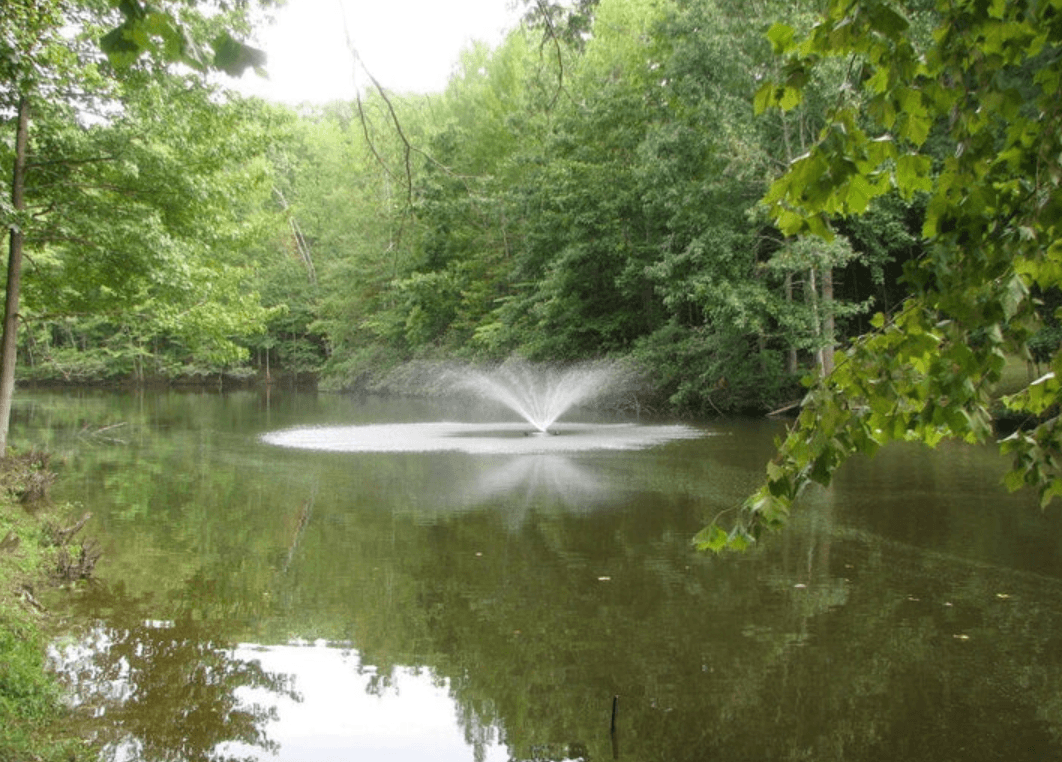
A pond may look like everything is okay, but in reality, it may be struggling to perform. The water may be okay on the surface, but the oxygen levels may be low, and the algae may be building up, causing damage that becomes visible as soon as the problems begin.
A floating pond fountain is more than just a decoration; it moves the water and changes the oxygen levels for the better.
Here is why that matters.
How Floating Fountains Help
A floating pond fountain pulls water from near the surface and sprays it into the air. That spray picks up oxygen through a process called gas transfer. The water falls back and pushes into lower layers, disrupting stratification and improving circulation throughout the pond.
Research from the University of Florida IFAS Extension shows that surface aeration through fountain-style units can raise dissolved oxygen levels in the upper water column, particularly in shallower ponds under 6 feet deep. The degree of improvement depends on fountain size, spray pattern, and pond surface area.
That circulation matters. When water moves consistently, stagnant zones shrink. Nutrients from decaying matter get exposed to oxygen-rich conditions, which changes how they break down. The environment becomes less favorable for the algae and bacteria that cause the most visible water quality problems.
What Happens When a Pond Stops Moving
Still water stratifies. As temperatures shift through the seasons, pond water separates into distinct layers. The top layer, called the epilimnion, warms up and holds oxygen relatively well. The bottom layer, the hypolimnion, stays cold and loses oxygen over time.
That oxygen-depleted bottom layer is where problems start. Decaying organic matter sits there and releases nutrients that feed algae. Fish avoid the area. Bacteria that thrive without oxygen produce hydrogen sulfide, which causes that familiar rotten-egg smell many pond owners notice in summer.
The middle transition zone, the thermocline, acts as a barrier. It blocks oxygen from reaching the lower water column. It also blocks bottom-layer nutrients from mixing and breaking down the way they should. Left alone, this cycle gets worse each season.
The Algae Problem
Algae need two things to spread fast: nutrients and sunlight. A pond with poor circulation tends to accumulate in the same place at the same time. That’s when blooms happen.
Cyanobacteria, often called blue-green algae, are the species most pond owners dread. It can produce toxins harmful to pets, livestock, and people. The EPA notes that nutrient-rich, warm, stagnant water is the primary condition that triggers cyanobacteria blooms.
Floating fountains don’t eliminate nutrients from the water. That’s worth saying plainly. They aren’t a complete solution on their own. But consistent water movement reduces the surface stagnation that makes blooms more likely. That’s a real, measurable benefit.
Dissolved Oxygen and Fish Health
Fish require dissolved oxygen to survive. The minimum requirement for the most common species found in ponds is 5 mg/L, and they will do much better at levels above 6 mg/L. The US Geological Survey states, “Warm water holds less dissolved oxygen than cold water, and summer is the time of year when fish kills occur most frequently.
A floating fountain keeps surface water moving, which improves oxygen exchange between the water and the atmosphere. In ponds where fish populations are a priority, this is one of the more direct benefits you’ll notice. It won’t replace proper stocking levels or regular maintenance, but it supports the conditions fish need to stay healthy through summer heat.
Spray Pattern and Pond Coverage
Not all floating fountains perform the same. Spray pattern affects how much surface area gets aerated and how deep the circulation reaches.
A geyser-style spray throws water high and creates good surface agitation. A ring or fan pattern spreads water over a wider horizontal area. In deeper ponds, some property managers pair a floating fountain with a bottom diffuser aerator to target the hypolimnion directly.
The right setup depends on pond size, depth, and the specific problems you’re dealing with. Shallow decorative ponds respond well to a standard floating unit. Larger or deeper ponds usually need more thought around placement and supplemental aeration.
Seasonal Considerations
In climates with freezing winters, a floating fountain needs to come out of the water before ice forms. Running a pump in freezing conditions can damage the motor. Some pond owners switch to a de-icer or winter aerator to keep a small area of open water and maintain oxygen flow under ice.
In warmer climates, fountains can run year-round. The most critical period is late summer, when water temperatures peak and dissolved oxygen drops. Running a fountain during those months, especially overnight when photosynthesis stops producing oxygen, is one of the more practical steps you can take for pond health.
See also: Grow Website 290153804 Traffic Using Tudiocaq.Con Strategies
The Effect on Water Clarity
One thing people notice after running a floating fountain consistently is improved water clarity. This isn’t immediate. It takes weeks, sometimes longer, depending on the nutrient load already in the pond.
Better circulation speeds up the breakdown of suspended organic particles. Reduced algae pressure means less green coloration in the water. These changes happen gradually, but they do happen. A pond that’s been properly aerated for a full season often looks noticeably different from one that hasn’t.