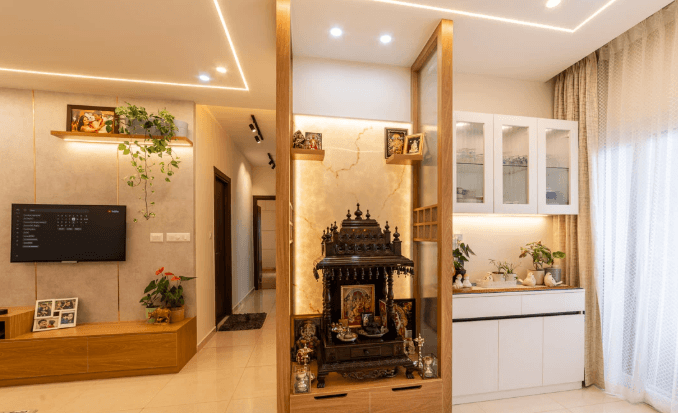
A pooja room is the one space in a home that carries weight beyond design. People walk past expensive sofas without a second thought but they notice the temple. Family members notice it. Guests notice it. And that quiet judgment, fair or not, lasts a long time. So when planning a luxury pooja room today, the goal is rarely about showing off. It is about getting it right. The room has to feel sacred without feeling stuck in time. It has to feel modern without losing its soul.
The following illustrates how this balance works in practical terms.
Start with the stone, not the style
Most luxury pooja room mistakes happen at the material stage. People pick a design first, then look for a stone that fits the budget. By the time they realise what they have settled for, the floor is already down, and the temple stands half-built.
Stone selection should come first. For pooja rooms, you have real options. White Vietnam marble works beautifully for the temple itself, prized for its translucent quality and consistent grain. Wonder White marble from India holds up well for flooring and wall cladding. Onyx, especially when backlit, can turn a small alcove into something that feels almost lit from within.
What you avoid matters as much. Stone is passed off as premium when it is not. Patches of filler hidden under polish. Slabs from mismatched batches that only show their flaws once they sit side by side under a single light.
Heritage is in the details, not the size.
A common assumption is that luxury means scale. Larger temple, more pillars, taller domes. The truth runs the other way. Most well-designed pooja rooms are modest in footprint. The luxury sits in the carving, the proportion, the joinery.
Hand-carved jaali screens cast soft patterns on the floor when light passes through. A single carved pillar, properly proportioned, holds more presence than four mass-produced ones. Lotus motifs at the base. Bell carvings along the edge. Subtle floral inlays in semi-precious stone for those who want it.
These details are what your eye returns to during prayer. Not the size of the structure.
Layout that respects vastu without feeling rigid
Vastu principles for pooja rooms are clear enough. Northeast is preferred. Idols face east or west depending on tradition. The person praying does not face south. The space stays clean of clutter, with no plumbing or shoe storage nearby.
Where modern homes struggle is with geometry. Apartments rarely give you a perfect northeast corner with the right dimensions. Smart design works around that. A pooja niche set into an east-facing wall. A small dedicated room carved out of an underused corner of the dining area. A standalone marble temple placed thoughtfully rather than built into the architecture.
If you live in a high-rise, you may not get a textbook vastu layout. You can still get the orientation, the energy flow, and the sense of separation right.
Lighting changes everything
The same temple looks different under three lighting choices. The harsh ceiling light makes the marble look flat. Warm cove lighting tucked behind the structure brings out the depth in white stone. A single focused spot above the deity creates the kind of atmosphere people remember walking out of.
Backlit onyx panels behind the temple, used carefully, create a glow that feels alive without feeling theatrical. Diyas and natural flame still belong, of course. The electrical layer just supports them.
Skip the chandelier instinct. Most pooja rooms suffer from too much light, not too little.
Where modern touches actually belong
Modern design shows up best in restraint. Clean lines on the temple base. Minimal hardware. Hidden storage for puja supplies so the room never looks cluttered. Glass shutters that protect the deities without hiding them.
Sound is another subtle upgrade. Concealed speakers playing soft mantras at low volume. Climate control that prevents marble from absorbing kitchen humidity over the years. These choices feel invisible. You only notice their absence in homes that skipped them.
See also: Soft Edits That Are Reshaping the Way Hair Care Feels
A space worth getting right
Pooja rooms outlast most other parts of a home. Sofas get replaced. Kitchens get renovated every decade. The temple stays. The marble you choose now is the marble your children will inherit.
That is reason enough to slow down. To pick a stone you have actually seen in person. To work with people who design temples for a living, not as a side project. To understand what each material does over twenty years, not just on the day of installation.
The dusty lanes of Kishangarh have built many temples, and many disappointments along with them. Buyers who walk in without guidance often walk out with promises that quietly fall apart later.
Heritage and modern living do meet in the right pooja room. The trick is letting the stone do most of the talking.